BLOG
Framing Silence: The Art of Negative Space
DATE
Jul 18, 2025
CATEGORY
Editorial Study
01/
The Unspoken Dialogue
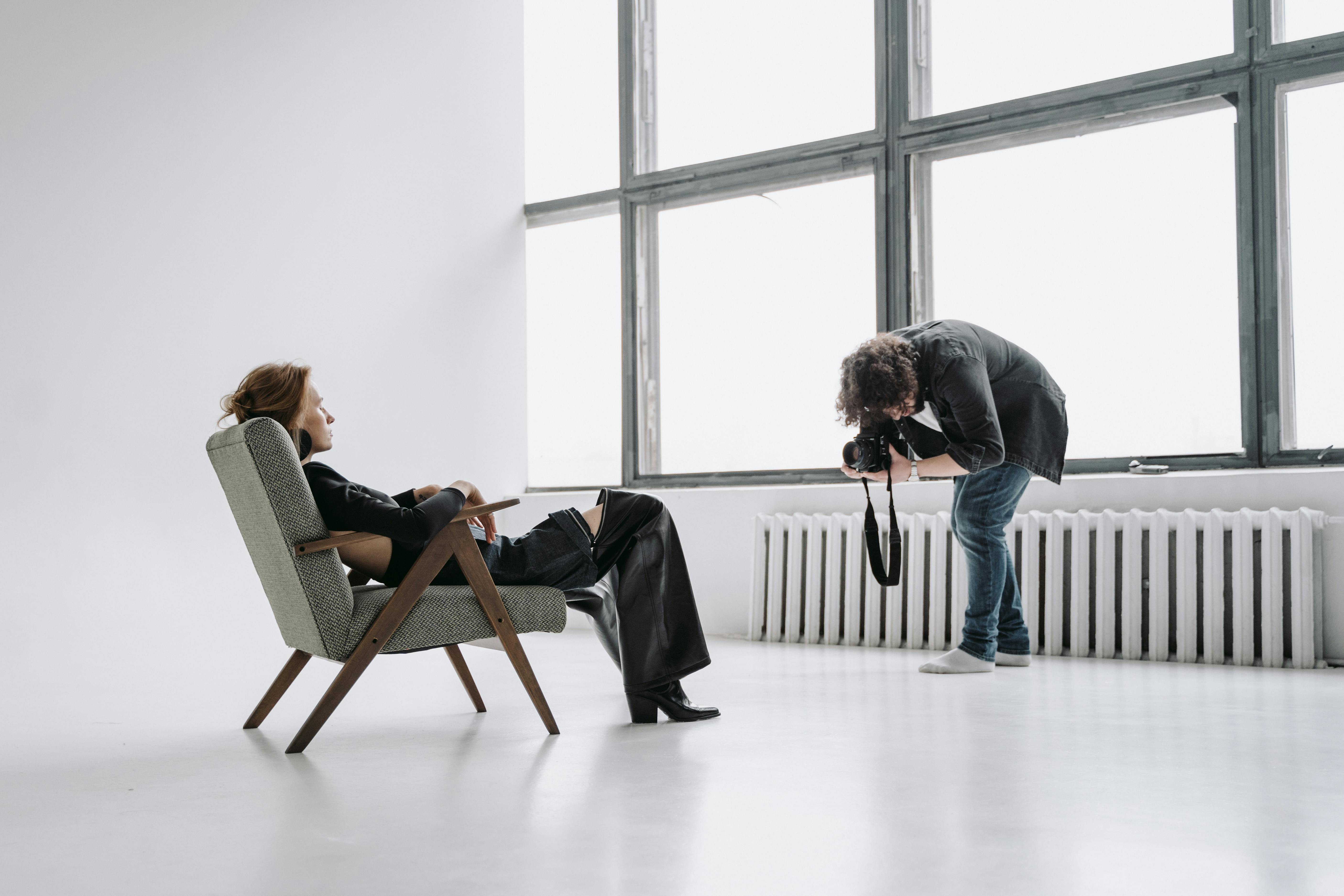
The scene is deceptively simple a lone chair, a distant window, a subject caught mid thought. But within that quiet composition lies an unspoken conversation. The distance between the camera and the subject becomes a canvas of tension, stillness, and vulnerability. Negative space allows the viewer to participate to pause and reflect within the silence of the frame.
02/
Designing for Presence, Not Clutter
The intentional absence of elements in this frame forces our eyes to notice what truly matters the lines of posture, the softness of natural light, and the harmony of architecture. The minimalist setting is not an aesthetic shortcut, but a conscious choice to design for presence. In stripping away distractions, the story becomes louder, clearer, and far more intimate.
03/
Silence as a Compositional Tool
Where there is less, every choice carries more weight. In this photograph, the space around the subject functions as visual silence. It’s the breathing room that emphasizes expression, body language, and solitude. This restraint turns the composition into a meditation on form and emotion proof that silence can be just as powerful as sound.
04/
Spatial Storytelling
Negative space isn’t just a technique it’s a mood. Here, it becomes a character on its own, shaping how the viewer perceives the scene. The vast white walls, cold floor, and distant windows don’t isolate the subject they frame her internal world. This is spatial storytelling in its purest form: where structure, emotion, and composition converge.